
Landscaping, mowing, weed control and fertilization, sod, lawn maintenance, pine straw, mulch, rock, leaf and debris removal, and hedge and shrub trimming. Owner-operated, across Daphne, Spanish Fort and Fairhope.
Tell us roughly how big the property is and what it needs.
We’ll get back to you and talk the job through.
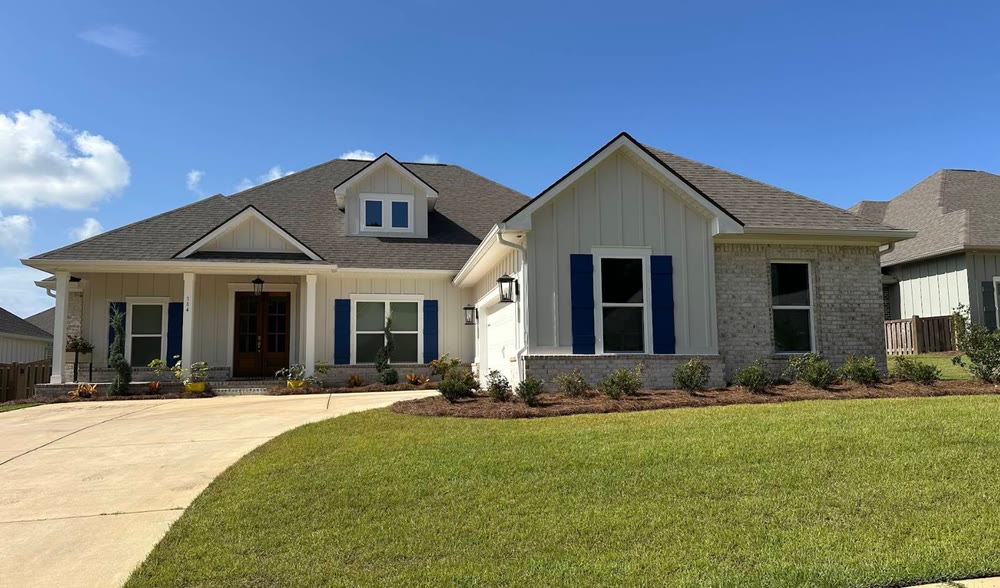
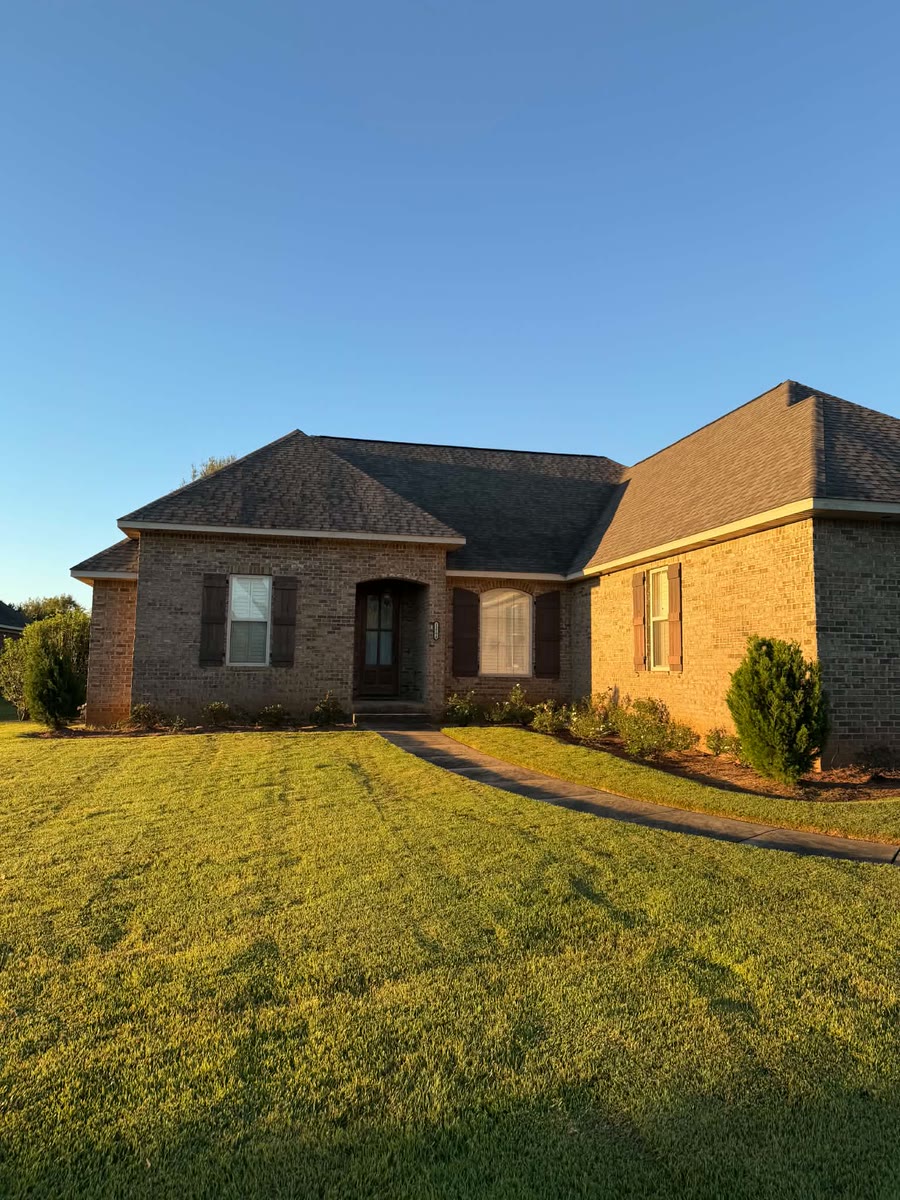
The one item Stan starred, and the one that changes what a property looks like from the road. Beds laid out along the house, bed lines cut so there is a real edge instead of grass creeping in, planting chosen for the spot, then strawed or mulched back to the wall.
It covers the design end as much as the labor end — working out what a Gulf Coast front will actually support before anything goes in the ground, which is the difference between a bed that fills out and a bed that gets replaced next spring.
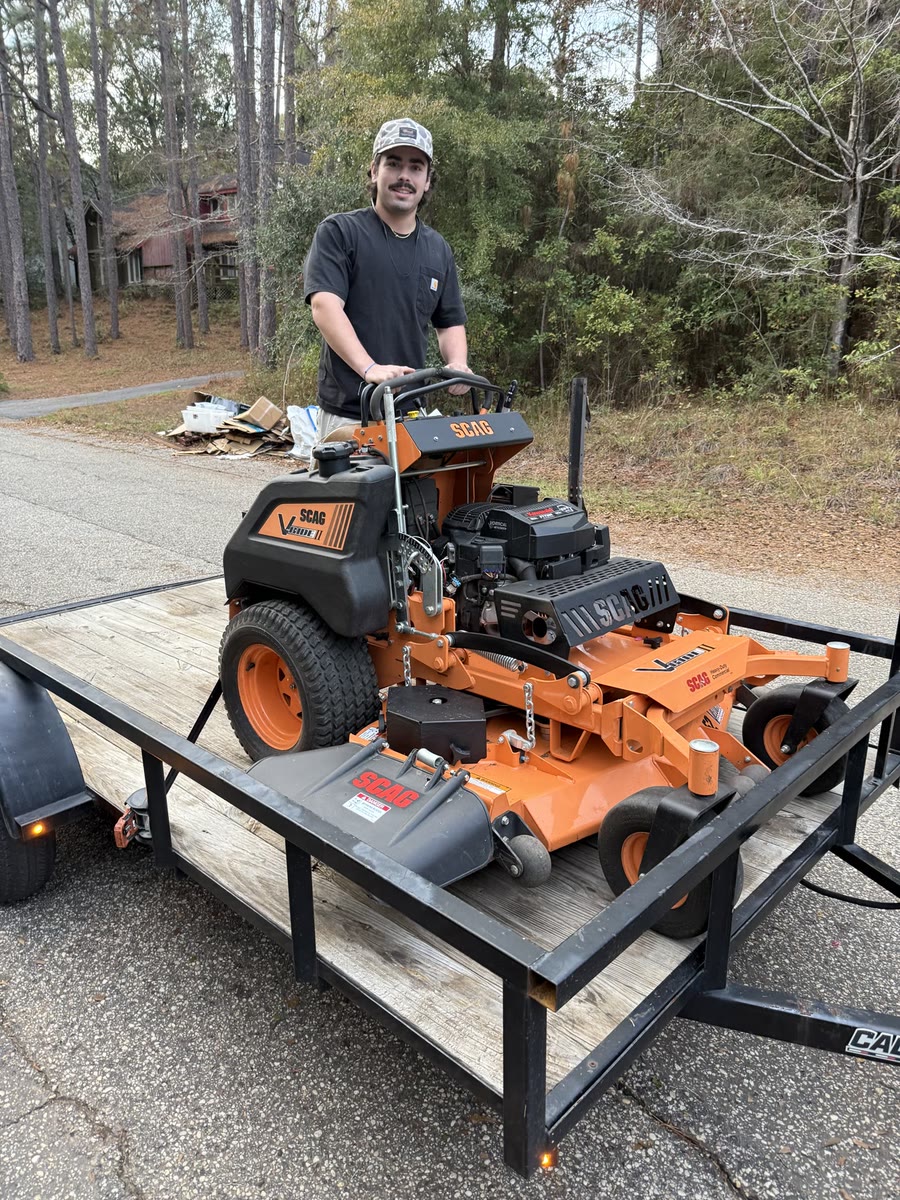
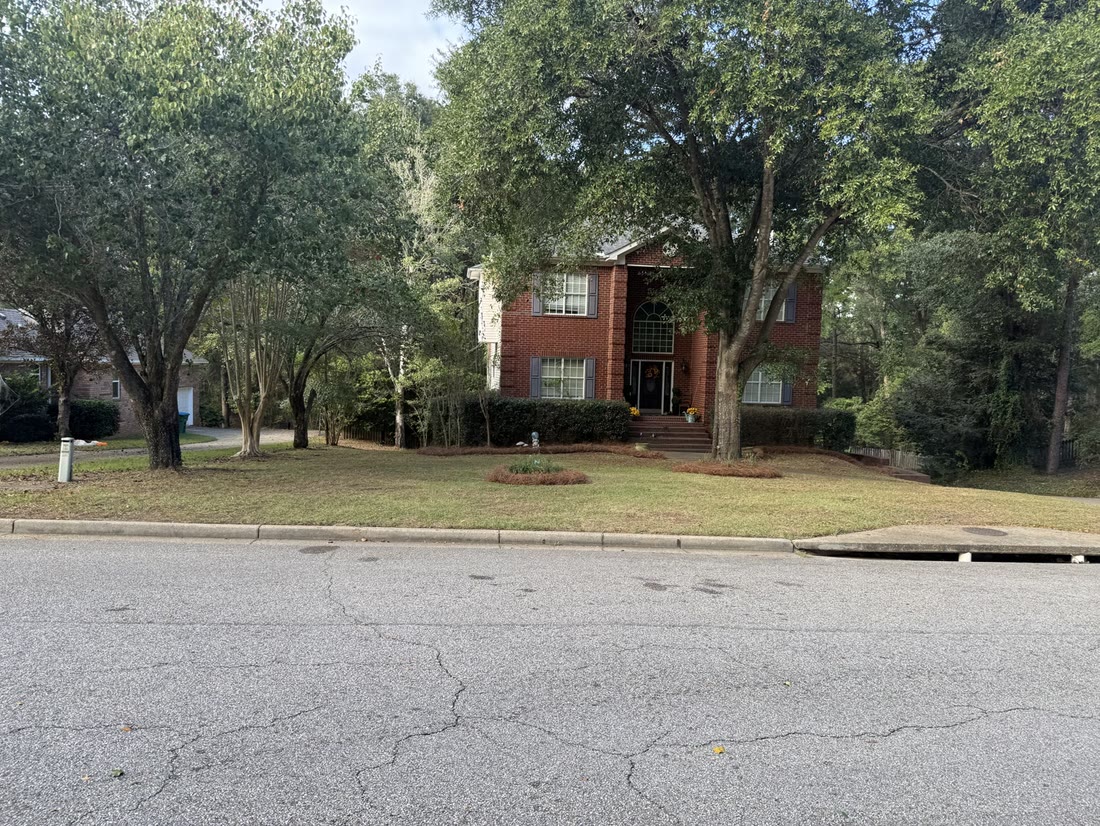
Mowing, edging and trimming on a schedule rather than when it gets away from you. Trimmed around the beds, the trees and the posts, and blown down before anyone leaves.
Most of the value is in the regularity. On the Gulf Coast a lawn kept level every week through the growing season is a different thing from one cut hard three times a summer, and over a season it costs less than rescuing it does.
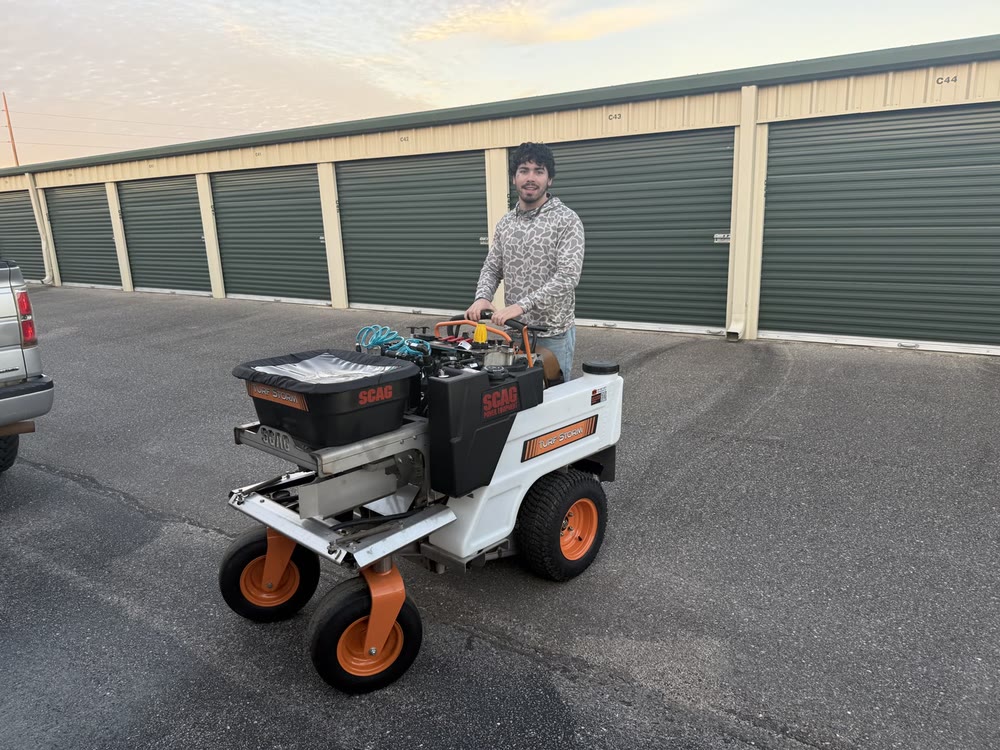
The service most mowing outfits leave to the homeowner, and the one Stan names as one of the three things the business is. It runs on a dedicated stand-on spreader-sprayer — granular in the hopper, liquid in the tank — rather than off the back of a mower.
Feeding and weed control are the same conversation: a thin lawn is a weed problem waiting to happen, and spraying a lawn that is never fed is treating the symptom every six weeks forever.
New lawns, bare patches and the strips alongside a new drive or a new bed. Sod is the fast version of a lawn and it is unforgiving about what is underneath it — the grading and the contact matter more than the grass does.
Usually it is the last step rather than the first: beds in, edges cut, then sod laid up to the line so the two finish together instead of the turf being trimmed back out of a bed six weeks later.
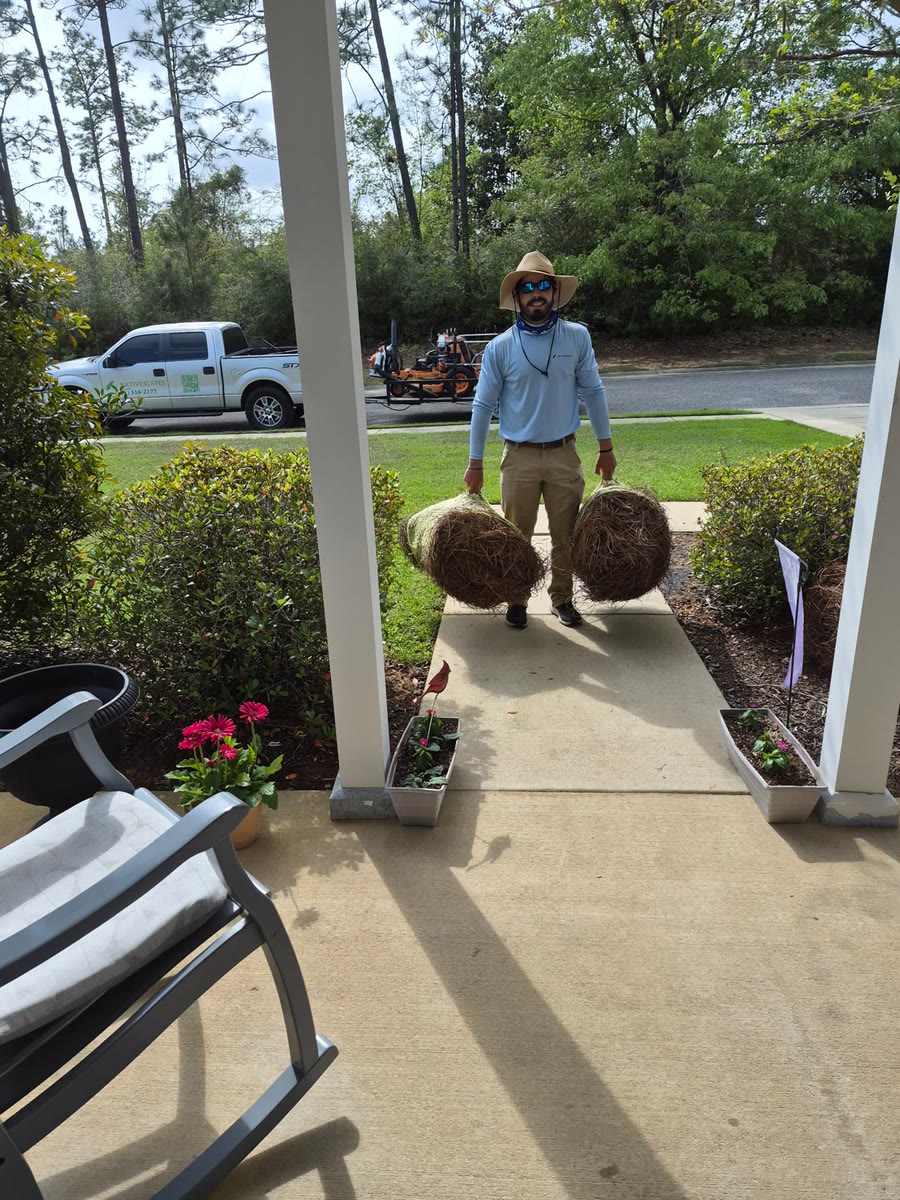
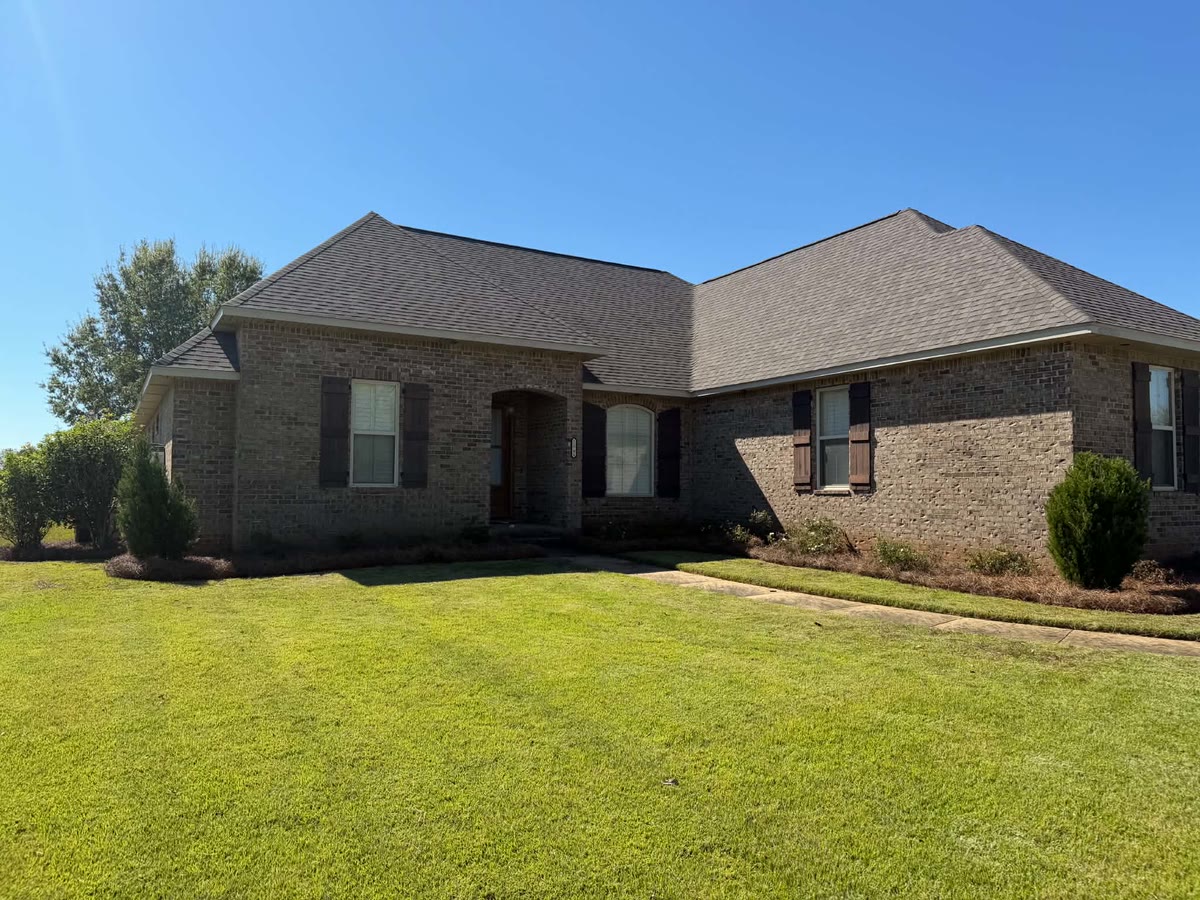
Pine straw, mulch and rock — three different answers to the same question, and on the Eastern Shore straw is usually the right one. It holds a slope, it does not float off in a summer downpour the way shredded mulch does, and it is what the local plants grew up under.
Mulch where a bed wants the darker line, rock where nothing should ever grow again. Laid to a cut edge and kept off the stems either way, because mulch piled against a trunk is how a shrub gets replaced.
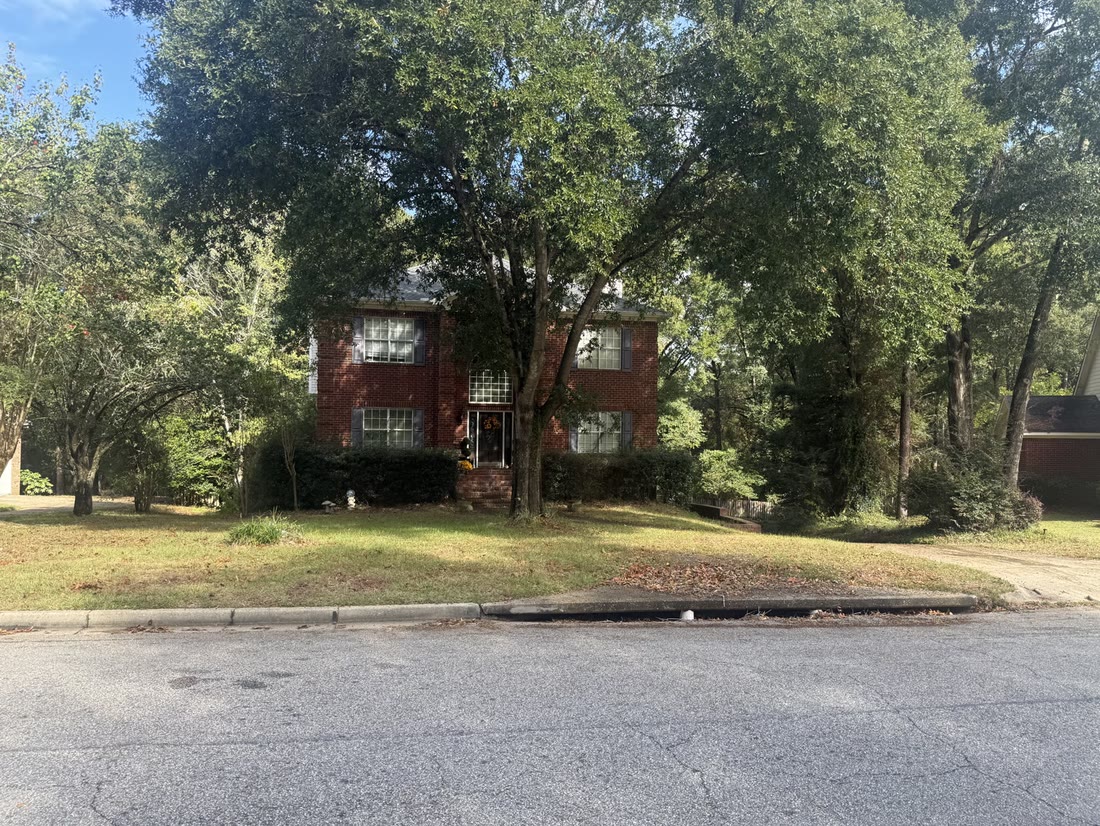
Leaves, needles and whatever the last blow left on the property. The two photos on this row are the same front yard before and after, and the leaf work is most of the difference between them.
It matters more under oaks and pines than people expect: a mat of wet leaves left on a lawn through a mild Gulf winter will thin the grass underneath it, and then the spring job is a repair rather than a clean-up.
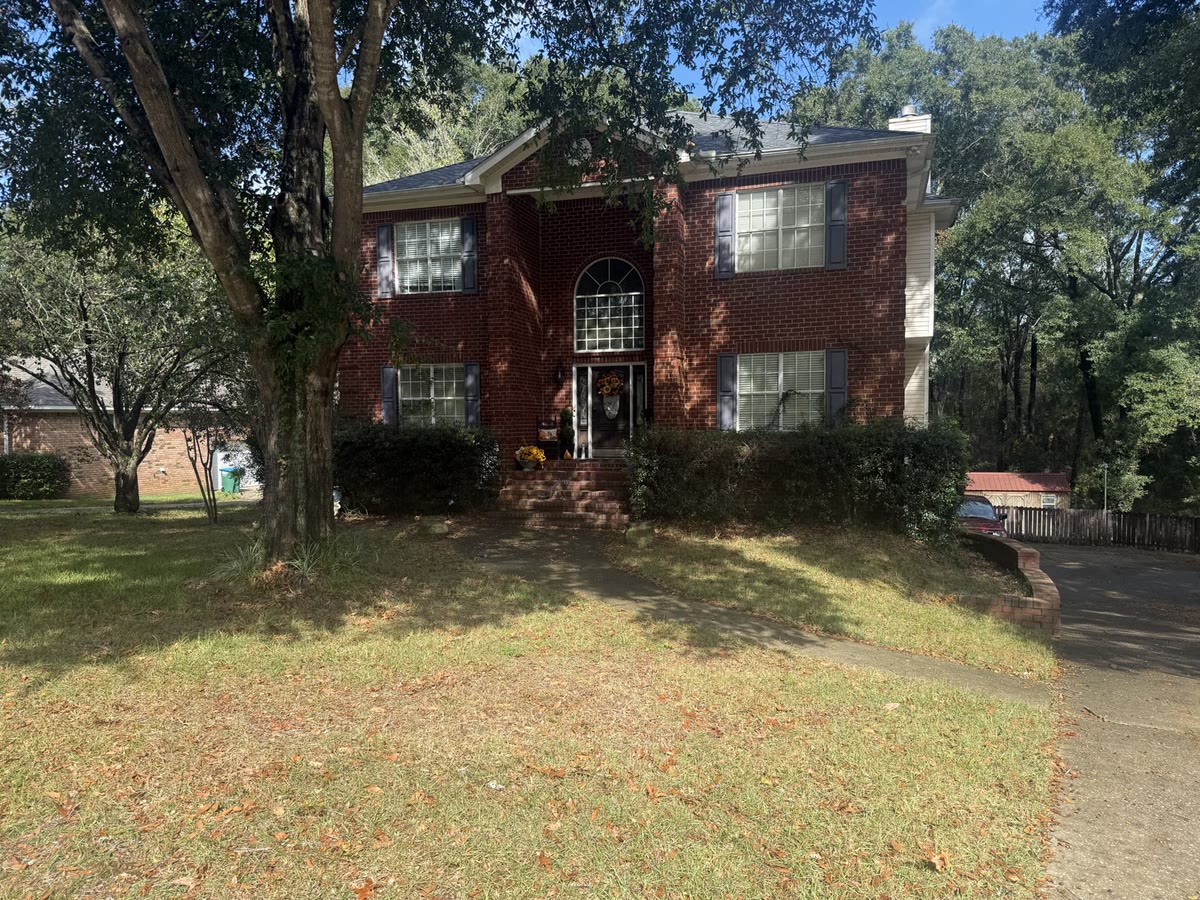
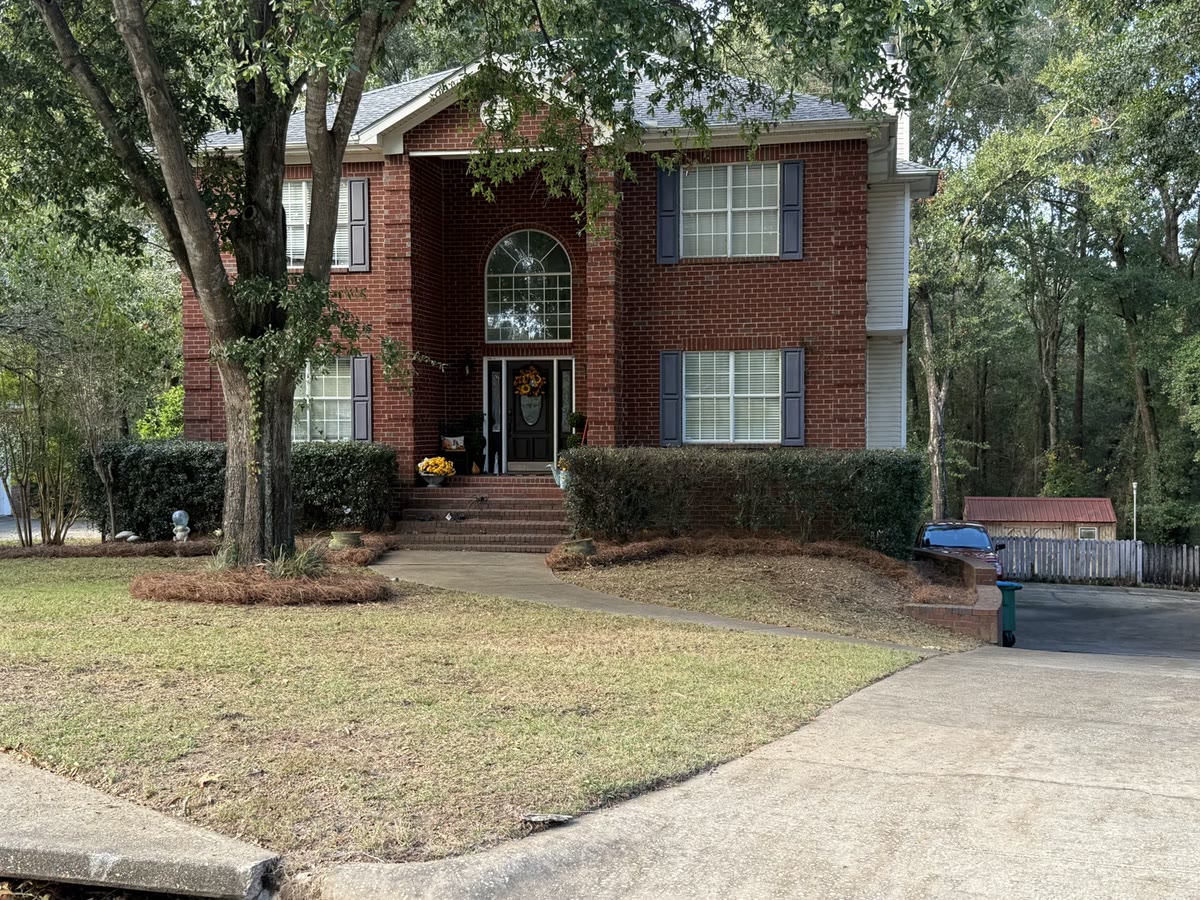
Hedges clipped flat on the top and square on the face, shrubs taken back to a shape rather than rounded off wherever the blade happened to stop. A hedge is a line before it is a plant, and once the line wanders it never quite looks right again.
Timing is the other half of it. Cutting a flowering shrub at the wrong point in the year costs you the next season’s flowers, which is a thing a mowing crew with a hedge trimmer will not think about.
Most jobs are two or three of them in order anyway — the leaves off before the beds get re-done, the beds done before the sod goes in. Send a photo of the property and roughly what you want out of it, and you will be told what it actually needs, including if that is less than you asked for.